Find out more about Sushi and Japanese Cuisine.
Click here for Sushi/Japanese
Terminology
Frequently Asked Questions:
1. What is sushi?
2. What are the different kinds of sushi?
3. What is sashimi?
4. What are those other things inside a sushi package?
5. What is wasabi?
6. What is gari?
7. Why is gari always served with sushi?
8. What is inari?
9. Can I buy your Condiments?
10. When is the expiration date on Genji's original soy sauce? It doesn't state on label.
11. How spicy is your spicy sauce?
12. Do you have anything vegetarian/vegan?
13. What do you recommend for a beginner?
14. Is it safe to eat raw fish?
15. How do you eat sushi?
16. How do you use chopsticks?
1. What is sushi?
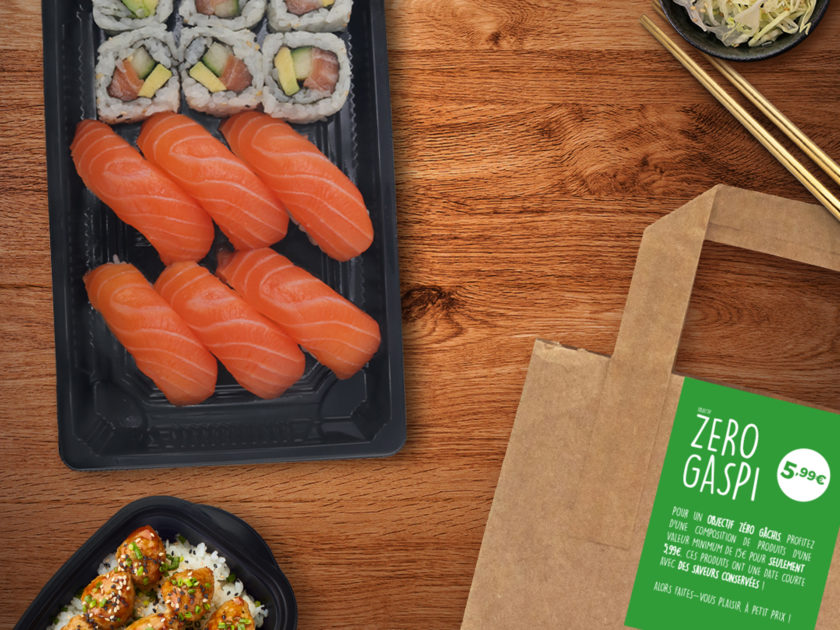
Sushi is a food made of vinegared rice combined with various
toppings or fillings. In Japan, the word "sushi" refers to a broad
range of foods prepared with sumeshi and vinegared rice. Sushi toppings
or fillings can be anything, including seafood (cooked or raw), meat,
vegetables, mushrooms, or egg. In the Western world, sushi is often
misunderstood to mean clumps of rice topped with raw fish, or even
simply raw seafood, which is properly called sashimi. Genji Sushi
Express offers sushi for everyone.
2. What are the different kinds of
sushi?
There are various types of sushi such as:
Maki-zushi (rolled sushi)
Hoso-Maki (regular roll)
Ura-Maki (inside-out roll)
Futo-Maki (large roll)
Inari-zushi (fried tofu pouches stuffed with sushi rice)
Nigiri-zushi (finger-sized raw fish or shellfish on a bed of vinegared
rice)
Temaki-zushi (hand roll)
Chirashi-zushi (a bowl of sushi rice with various toppings)
Oshi-zushi (pressed sushi)
3. What is sashimi?
Sashimi is thinly sliced raw seafood (no rice or rolls).
4. What are those other things inside a
sushi package?
Soy sauce, gari
and wasabi. You may also see a shredded
white mass of Japanese radish called daikon.
5. What is wasabi?
Wasabi is the grated root of the wasabi plant -a Japanese
horseradish. The best tool to use for grating wasabi is normally
considered to be a sharkskin grater. Real wasabi is believed to
kill germs on raw fish. In order to maintain freshness, Genji Sushi Express offers
genuine Japanese wasabi freshly grated, rather then packed individual
pouches. It is all-natural, no artificial
coloring, never dehydrated or powdered.
6. What is gari?
Gari is the sweet, pickled ginger. Genji Sushi Express's gari is made with our house vinegar.
7. Why is gari always served with sushi?
It helps to cleanse the palate between bites, so you
can enjoy many different tastes as it should be.
8. What is inari?
Inari is a fried tofu pouch stuffed with sushi rice.
It has a sweet soy sauce taste. It is named after the Shinto god,
"Inari", whose messenger, the fox, is believed to have a fondness
for fried tofu.
9. Can I buy your Condiments?
Soy sauce: YES!. Genji's original soy sauce, is bottled and available for purchase.
Wasabi and Dumpling Sauce: YES!. You can purchase these items in bulk of 10 small packs for
99¢.
Ginger Miso Dressing: YES! Genji's original Ginger Miso Dressing, is bottled and available for purchase.
Ginger, Wasabi, Spicy sauce and Dumpling sauce. NO! However, you
can ask our chefs to spare some for you!
All of the above items are Genji Sushi Express originals. They
are made from carefully selected, high quality ingredients
that are all-natural and guaranteed.
10. When is the expiration date on
Genji’s soy sauce? It doesn't state on the label?
If unopened, soy sauce has a shelf life of over a year.
For the best taste, we recommend that you use it within 3 months after
opening. Our original soy sauce is made with our original recipe, specially brewed with sweet rice wine, and has less sodium than commercial soy sauce.
11. How spicy is your spicy sauce?
Not too spicy -It is perhaps more comparable to what most would refer to as "Medium" spicy. Most Japanese
food is very mild, and even items deemed as "spicy" are not overpowering.
12. Do you have anything vegetarian/vegan?
Yes, about 20% of our products are vegan (Try any of our Avocado rolls, Cucumber rolls, other vegetable
rolls or Inari) and about
half our products use cooked fish.
13. What do you recommend for a beginner?
Try a California Roll -It is not too "fishy". Or perhaps a
tuna roll if you prefer something a bit more spicy. If you want to avoid fish all together, any of our avocado rolls, cucumber rolls, other vegetable
rolls or Inari (all rice wrap with a great sweet flavor) are a few a great items to start with.
14. Is it safe to eat raw fish?
Absolutely. It is totally safe. All of our fish are quality sushi-grade.
15. How do you eat sushi?
They say that there is sushi etiquette, a Japanese tradition,
and Samurai spirit! Well, sushi is a healthy, delicate, and
delicious finger food. Your sushi experience should not be a daunting
task. You can pick sushi up with your fingers or chopsticks, dip
them into a pool of soy sauce, -then into your mouth! That’s simply it!
16. How do you use chopsticks?
1. Hold the first chopstick immobile between the base of the thumb
and the middle finger
(The thick end is held, not the thin end).
2. Hold the 2nd chopstick in with the top of your thumb and the
tip of the index finger.
Even up the pairs like a pencil.
3. Move the 2nd chopstick while the 1st remains stationary.
4. Using the 2 as a pincher, pick up your food in this way.
5. And... Keep practicing!
Sushi/Japanese Terminology:
Hashi (箸)
= chopsticks
Wasabi (山葵、わさび)
= Japanese horseradish
Gari (ガリ)
= sweet, pickled ginger
Shoyu (醤油)
= soy sauce
Nori (海苔)
= dried seaweed
Su (酢)
= vinegar
Sumeshi (酢飯)
= vinegared sushi rice
Maguro (鮪)
= tuna
Toro (とろ)
= fatty tuna
Sha-ke, or Sake (鮭)
= salmon
Hamachi (はまち)
= yellowtail
Masago (まさご)
= flying fish roe (eggs)
Unagi (鰻)
= eel (freshwater)
Ebi (海老)
= shrimp
Kani (蟹)
= crab meat
Tako (たこ)
= octopus
Ika (いか) = squid
Kappa-maki (かっぱ巻き)
= cucumber roll
Tekka-maki (鉄火巻き)
= tuna roll
Tamago-yaki (玉子焼き)
= egg omelet
O-cha (お茶)
= tea
Ryoku-cha (緑茶)
= green tea
Sake (酒)
= Japanese rice wine
Misoshiru (味噌汁)
= miso soup
Kaisou (海藻)
= seaweed
Goma (胡麻)
= sesame seeds
Gyo-za (餃子)
= Japanese dumpling
Shiitake (椎茸)
= Japanese mushroom
Miso (味噌)
= soybean paste
Ponzu (ポン酢)
= sauce made with soy, dashi, and Japanese citron
Makisu (まきす)
= bamboo mat to make sushi rolls
Oishii (おいしい)
= yummy
Itadaki-masu (いただきます)
= phrase said in Japan before eating
Gochisou-sama (ごちそうさま)
= phrase said in Japan after eating
back to top
|